


14 DIY Musical Instruments Kids Can Make (and How to Play Them)
Quick answer: The easiest musical instruments for kids to make use things you already have: cans, boxes, paper plates, cardboard tubes, plastic eggs and rubber bands. Five great first builds:
- Shakers: plastic eggs or a bottle with rice (steady beat).
- Drums: a can with a balloon stretched over the top (steady beat).
- Rubber band guitar: a cereal box, a tube and rubber bands (high and low).
- Water xylophone: glasses with different amounts of water (pitch).
- Rain stick: a cardboard tube with beans inside (loud and soft).
Below: all 14 crafts, the music skill each one teaches and a game to play once it's built.
Making instruments is one of my favorite ways to get kids excited about music. It mixes art, play and real music skills, and it costs about as much as your recycling bin.
Here's the secret, though. Building is fun, but PLAYING is where the music happens.
A quick safety note: rice, beans, beads, jingle bells, bottle caps, bobby pins and balloon pieces are choking hazards for kids under 3. For little ones, a grown-up builds, lids get glued or taped shut and play stays supervised. Grown-ups handle craft knives, hot glue and anything glass.
1. Wacky Cardboard Guitar
You need: a cereal box, a paper towel tube, rubber bands of different sizes and duct tape. Tutorial: PBS Kids for Parents.
Make it: Cut a sound hole in the front of the box and a hole in the top for the tube. Tape the tube in as the neck. Stretch the rubber bands from the top of the neck to the bottom of the box.
Music skill: pitch (thin, tight bands sound higher; thick, loose bands sound lower). Ages: about 4 and up.
Play it: Play "high or low?" Pluck two bands and your child points up for the high one and down for the low one.
2. Can Drums
You need: clean cans in different sizes (opened with a safety can opener), balloons and rubber bands. Tutorial: It's Always Autumn.
Make it: Cut the bottom off a balloon, stretch it tight over the open can and hold it on with a rubber band.
Music skill: steady beat, plus high and low (bigger cans tend to sound lower). Ages: about 3 and up.
Play it: Play "copy me": you tap a short rhythm and they tap it back.
3. Rainbow Paper Plate Tambourine
You need: two paper plates, paint, a hole punch, ribbon, jingle bells and glue. Tutorial: Kids Craft Room.
Make it: Paint a rainbow on the plates and glue them together. Punch holes around the edge and tie on the bells loosely so they jingle.
Music skill: dynamics (a gentle shake vs. a big shake). Ages: about 3 and up, with a grown-up handling the bells.
Play it: Shake softly for a whisper song, loudly for a shout song. Kids LOVE the switch.
4. Egg Maracas
You need: plastic eggs, rice (or popcorn, beans or lentils), plastic spoons and tape. Tutorial: Made Everyday.
Make it: Fill an egg partway, close it and tape it between two spoons. Wrap the handles in tape so the egg stays sealed.
Music skill: steady beat and timbre (each filling sounds a little different). Ages: about 2 and up, with a grown-up sealing them.
Play it: Make three eggs with three fillings, close your eyes and guess which one is shaking.
5. Rain Stick
You need: a long cardboard tube, beans or rice, tape to seal the ends and washi tape to decorate. Tutorial: Mum in the Madhouse.
Make it: Seal one end, pour in the filling and seal the other end.
Music skill: dynamics (tip it slowly for a drizzle, fast for a storm). Ages: about 3 and up.
Play it: Tell a weather story: drizzle (soft), big storm (loud), then sunshine (silence).
6. Rainbow Rhythm Shaker
You need: a clear plastic bottle, colored pom-poms, rice and ribbon. Tutorial: Kids Craft Room.
Make it: Your child drops in the pom-poms and rice. A grown-up glues the lid on tight.
Music skill: steady beat and start/stop. Ages: sealed, it's a great toddler shaker.
Play it: Freeze shake! Shake while the music plays and freeze when it stops.
7. Spinning Hand Drum
You need: a chip canister, a wooden dowel, balloons, string, two beads, tape and strong glue. Tutorial: Moms and Crafters.
Make it: A grown-up cuts a ring from the canister and glues in the dowel as a handle. Stretch a balloon over each side and tie a bead on a string to each side. Spin the handle and the beads tap the drum.
Music skill: tempo (fast and slow). Ages: about 4 and up; supervise the beads.
Play it: Spin slowly like a sleepy turtle, then fast like a racing cheetah.
8. Paper Tube Kazoo
You need: a toilet paper tube, wax paper, a rubber band and paint. Tutorial: Today's Parent.
Make it: Cover one end with wax paper and hold it on with a rubber band. A grown-up pokes a small hole in the side. Hum into the open end and the paper buzzes.
Music skill: pitch matching (a kazoo plays whatever note you hum). Ages: about 3 and up.
Play it: Echo songs. You hum a two-note tune, one high and one low, and they hum it back.
9. Glowing Rock Star Microphone
You need: a small flashlight, a hollow plastic ball, a pipe cleaner, craft jewels and hot glue. Tutorial: I Heart Crafty Things.
Make it: A grown-up hot-glues the ball onto the flashlight lens. Decorate with the pipe cleaner and jewels.
Music skill: singing and performing. Ages: about 3 and up.
Play it: Dim the lights, set up a stage and pass the mic. Everyone sings one line of a song they know.
10. Nature Stick Rattle
You need: a stick or piece of driftwood, shells with holes (or beads), string and an elastic band. Tutorial: Red Ted Art.
Make it: Find a stick on a nature walk. Thread the shells onto string and tie them on so they clack together.
Music skill: timbre (shells, wood and beads each sound different). Ages: about 4 and up.
Play it: Shake the rattle on beats 1 and 3 while someone plays a can drum on 2 and 4.
11. Rainbow Water Xylophone
You need: eight matching glasses or jars, water, food coloring and a metal spoon. Tutorial: There's Good in Store.
Make it: Fill the glasses with different amounts of water, from almost full to almost empty, and color each one. Tap gently with the spoon.
Music skill: pitch (when you tap, more water sounds lower). Ages: about 4 and up, with a grown-up close by.
Play it: Tune three glasses by ear until they sound like Do, Re and Mi, then play "Hot Cross Buns": Mi, Re, Do. Bonus: color them red, orange and yellow, our Prodigies colors for C, D and E.
12. Drinking Straw Pan Flute
You need: about nine drinking straws and clear tape. Tutorial: Relentlessly Fun, Deceptively Educational.
Make it: Cut the straws into a staircase of lengths and tape them side by side. Blow gently across the tops.
Music skill: pitch (long straws sound low, short straws sound high). Ages: about 5 and up.
Play it: Play from the long end to the short end and sing along as the notes climb, then slide back down.
13. Bobby Pin Thumb Piano
You need: bobby pins, a small wooden block, craft sticks and glue. Video tutorial: ThriftyFun on YouTube.
Make it: Clamp the bobby pins under a craft stick so the ends stick out at different lengths, then fix it to the block. Pluck the ends with your thumbs.
Music skill: pitch (longer pins ring lower). Ages: about 6 and up.
Play it: Make up a lullaby. Pluck one pin slowly, then add a second note when it feels right.
14. Monster Castanets
You need: a strip of cardboard, two metal bottle caps, glue and colored paper. Tutorial: Krokotak.
Make it: Fold the cardboard in half and glue a cap inside each end so they click when you squeeze. Add eyes and scary teeth.
Music skill: rhythm. Ages: about 4 and up.
Play it: Clap a rhythm and let the monster copy you. Try it in fruit: "beet, beet, cherry, beet," the way we teach rhythm with our Sweet Beets.
Music crafts by age
Toddlers (ages 1 to 3): You build, they play. Sealed shakers, taped egg maracas and a can drum are perfect. For more ideas, try these music activities for toddlers.
Preschool (ages 3 to 5): Kids can paint and decorate. Try the tambourine, rain stick, kazoo and guitar, then use them in these 15 music activities for preschoolers.
Early elementary (ages 5 to 8): The water xylophone, straw flute and thumb piano let kids test how size changes pitch.
Make a band and play a song
Give each player one job: drums keep the steady beat, shakers play along, the rain stick does the intro and the kazoo hums the tune.
Pick a song everyone knows, like "Twinkle Twinkle Little Star" or "Old MacDonald." Count off "1, 2, ready, play!" and go. For a big finish, everyone plays the last note as loud as they can, then freezes.
From homemade instruments to real notes
When your kids are ready for real songs with in-tune notes, color-coded instruments make the jump easy. Kids learn notes the way they learn letters, one at a time. A red bell playing C is like "A is for apple."
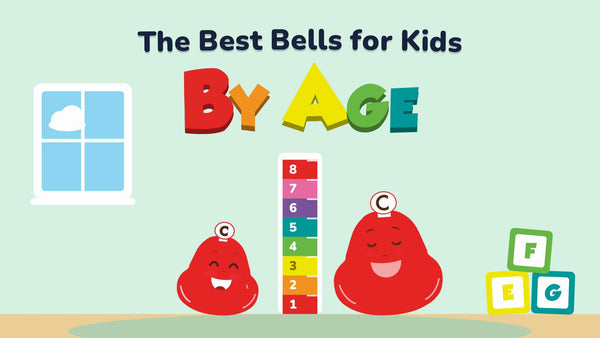
Our guide to the best bells for kids by age compares a bunch of options, including other brands. You can also browse our color-coded deskbells or read our Boomwhackers for kids guide.
And if you'd like a plan for all of this, that's what Prodigies Music is. Prodigies gives your child 1,000+ guided video lessons, color-coded songbooks and printables, made for ages 2 to 12 and built around play.
🎵 Start your membership at play.prodigies.com/join
Frequently asked questions
What are easy musical instruments for kids to make?
The easiest are shakers (plastic eggs or a bottle with rice), can drums, a paper plate tambourine, a paper tube kazoo and a rubber band guitar made from a cereal box.
What can I use to make a homemade drum?
Any sturdy container: a clean can, an oatmeal canister, a chip canister or a box. Stretch a balloon tightly over the open end for the drumhead. Pencils or wooden spoons make great drumsticks.
How do you make a homemade instrument that plays different notes?
Change the size. Water glasses, straws and rubber bands of different sizes all make different pitches. Longer or looser usually means lower; shorter or tighter usually means higher.
Are homemade instruments safe for toddlers?
They can be, with a grown-up in charge. Rice, beans, beads, bells, bottle caps and balloon pieces are choking hazards for kids under 3, so seal every lid with glue or strong tape and always supervise play.
What do kids learn from making musical instruments?
They learn how sound works (high and low, loud and soft) and practice real music skills like steady beat, rhythm and pitch. Plus, they're proud to play something they made.
Enjoy building your very own instruments with the kiddos, and as always, happy musicing!
Start your child’s musical journey
Join 10,000+ families learning music the colorful, hands-on Prodigies way.
Explore Prodigies
4 comments
5 OR 646=(SELECT 646 FROM PG_SLEEP(15))-
-1’ OR 2+169-169-1=0+0+0+1 or ‘NCseK4qz’=’
edO1v5WA’)) OR 720=(SELECT 720 FROM PG_SLEEP(15))—
1