Top 5 Instruments for Young Children: Best First Instruments
Quick answer: The best first instrument for most kids ages 2 to 6 is a small set of color-coded deskbells. They're easy to play, they play real tuned notes, and kids can focus on one or two notes at a time. My top 5 first instruments for young children:
- Deskbells (ages 2 and up): the easiest way to play real notes
- Piano or keyboard (ages 3 and up): the best long-term instrument
- Glockenspiel, resonator bells or Boomwhackers (ages 3 to 6 and up): color-coded and great in groups
- Ukulele (around age 5 and up): the gentlest way into guitar
- Drums and rhythm instruments (any age): perfect for beat, but no pitch
As a musician, a classroom teacher and a music teacher, I often have parents ask me what instruments to buy for their children.
For years, I went with the generic suggestion of "whatever your child seems most drawn to."
And while it's important to meet your child where they are, simply letting your child pick their first instrument is NOT the best way to make the most of their early musical years.
Most kids, for one reason or another, end up gravitating toward the guitar or the drums. Maybe it's the loudness of the drums, the popularity of the guitar, or because it's what Dad plays.
But to make the most of your child's critical window for auditory development (the early language years, from birth to around age 7), there are better starter instruments than the drums or the guitar. And as amazing as the piano is, there's a starter instrument that's even better for the littlest musicians.
How I ranked these instruments
Every instrument on this list is a good one. I ranked them by one question: how much meaningful play with pitch does it give a young child?
- Does it play real, tuned notes? Young ears are soaking up sound. An instrument that plays clear notes (C, D, E and so on) gives them something to soak up.
- Can small hands play it right away? No bow, no pick, no tricky technique. Tap it and it sings.
- Can you limit the notes? Two or three notes at a time beats 88 keys at once.
- Is it color-coded? Kids know their colors long before they know their letters, so colors let them find the right note on their own.
Why does pitch matter so much this early? Researcher Diana Deutsch and her colleagues studied perfect pitch in conservatory students and found that the earlier students started music training, the more likely they were to have it, with the highest rates among those who started at ages 4 to 5. In other words, give your kids exposure to pitch during early childhood. You don't have to raise a concert pianist. You just have to put real notes in their hands.
Best first instruments by age
| Age | Great first instruments | What to focus on |
|---|---|---|
| 1 to 2 (toddlers) | Deskbells (two or three at a time), shakers, a hand drum | Cause and effect: I tap it, it sings. Lots of free play. |
| 3 to 4 (preschool) | A full 8-note set of deskbells, a keyboard, Boomwhackers | Steady beat, matching colors, short songs like Hot Cross Buns |
| 5 to 6 (kindergarten) | Deskbells, piano or keyboard, glockenspiel, ukulele | Whole songs, first chords, reading colors on simple sheet music |
| 7 and up | Piano, glockenspiel with more notes, ukulele or guitar | Sharps and flats, two hands, reading standard notation |
For a deeper dive on bells at every age, see the best bells for kids by age. Choosing between bells and tubes? Read my honest deskbells vs. handbells vs. Boomwhackers comparison.
Now let's count down the Top 5 Instruments for Young Children, with the pros and cons of each, as we make our way to the ideal first instrument.
5. Drums and rhythm instruments
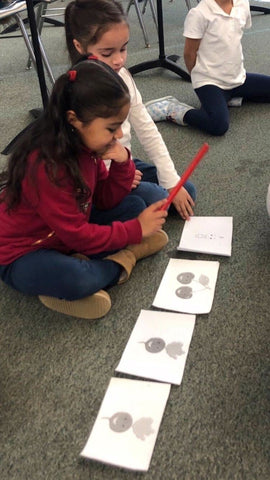
The drums start this list at Number 5 by being both the best AND the worst instrument for a Young Musician. Here's why.
Pros
- Drums and percussion (hand drums, rhythm sticks, egg shakers) are easy to start on. You hit it and it makes a sound. Tah dah!
- Because a drum has only one (or a few) sounds, it's predictable and consistent, which young children love.
- The loud, heartbeat-like pulse of a drum is a very human and powerful thing.
- Drums are the most "gross motor" of the instruments, so there's a lot of room for energy and movement.
Cons
I'm a drummer. I perform on the drum kit more than any other instrument, and I think every child should have some drums in their life. But only giving your preschooler drums does them a disservice. Drums don't play notes like C, D and E, and the early years are exactly when kids are best equipped to build their sense of pitch. That's why a tonal instrument (one that plays real notes) is essential.
Best instruments for teaching toddlers rhythm
If rhythm is your goal, start with a hand drum, a pair of rhythm sticks and some egg shakers. Tap along to songs you already sing, march to the beat, and echo short patterns. Our Sweet Beets fruit rhythms make it easy: "beet, beet, cherry, beet" is quarter notes and eighth notes in a form a three-year-old can say and play. Then put the beat on bells, so your child gets rhythm AND pitch at the same time.
4. Ukulele
Many children gravitate toward the guitar, and there are lots of kid guitars out there. The ukulele is a better way to start because it's one of the easiest stringed instruments to play.
Pros
- A ukulele has four soft nylon strings instead of six, so it's much gentler on small fingertips.
- It's small and light. A soprano ukulele fits a young child's lap and arms.
- Many first chords take only one or two fingers. The C chord is a single finger.
- Skills carry over to the guitar later.
Cons
Pressing a string down while strumming with the other hand is a two-handed job, and it takes a bit of finger strength. For most kids, around age 5 or older is the sweet spot. Younger kids will happily strum open strings, and that's fine, but they won't be playing songs yet.
3. Glockenspiel, resonator bells or Boomwhackers

These color-coded instruments are a great way to give children meaningful exposure to individual notes, especially kids ages 3 to 6 and groups of kids.
Pros
- Glockenspiels have metal bars with a bright, clear pitch and a long ring, which makes notes easy to hear and identify.
- Resonator bells put each note on its own block, so you can hand out or take away notes. That's great for limiting a child to two or three notes at a time.
- Boomwhackers are inexpensive, nearly indestructible plastic tubes. Tap one on your hand or the floor and it plays its note. Hand one to each child and the whole group plays a song together.
- All three come in the same note colors as Prodigies lessons, so a red bar, a red tube and a red bell are all C.
Cons
Glockenspiels and xylophones need a mallet, and aiming a mallet at the right bar is a real challenge for young kids. It's not out of their reach, just harder than pressing a bell. Boomwhackers are the opposite problem: they're easy to play, but one child holding eight tubes can't play a whole song alone. If it weren't for the instrument at Number 1, I'd recommend these first.
Glockenspiel pick: the Prodigies Glockenspiel
25 metal bars from G5 to G7, including all the sharps and flats, in the same note colors as our lessons. It comes with two mallets and a carrying case. Best for kids who are ready for more notes, often around ages 5 to 8.
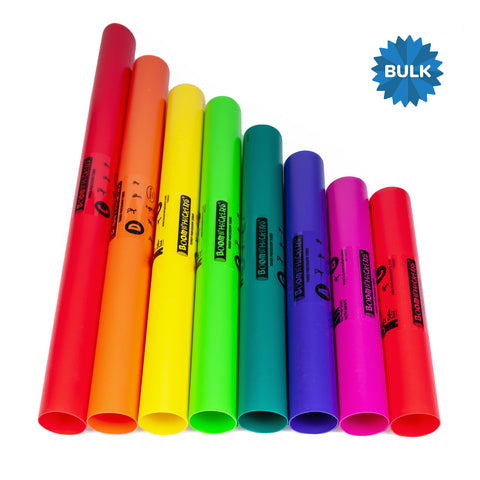
Got a group of kids, or a child who loves to move? Our Boomwhackers for kids guide has easy songs, games and free sheet music.
2. The piano (or keyboard)

The piano comes in at Number 2 because of its broad musical reach and because it's a time-tested, powerful first instrument.
Pros
- From fine motor coordination to a musical ear, the piano builds a wide range of skills. Piano skills also carry over to a MIDI keyboard, which many producers use as their main instrument when composing on a computer.
- Most important for preschoolers, the piano is one-to-one. Like a drum, a child presses a key and a sound comes out. No stick to swing, no pick to use, no bow to master. Press it and it goes.
- It's the best instrument for seeing how notes, chords and scales fit together.
Cons
All those black and white keys look alike to a young child, and tiny fingers have a hard time pressing just one key at a time. A set of color-coded piano stickers makes the notes much easier to find, and our color-coded piano lessons for kids use the same colors. Wondering whether a keyboard is good enough to start? Read piano lessons vs. keyboard lessons.
I recommend playing the piano to everyone... everywhere... always. It's never too late to learn and never too early to start.
But despite its all-around awesomeness, there's still one better option for your youngest Young Musician. Drum roll please...
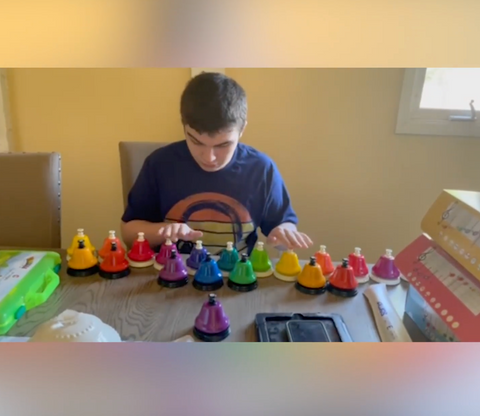
1. C major deskbells

For several reasons, the best starting instrument for a Young Musician is a set of C major deskbells. There are a few downsides too, and simple tricks for each.
Pros
- They're color-coded. Most children can name colors before they can name letters, so they'll find the red bell much faster than the C bell.
- They're one-to-one. Like the piano or a hand drum, press the button and the bell rings. No stick to swing, no bow, no strings to press and pluck. More time spent getting a predictable note means more learning.
- They're tuned to C major. It's the simplest scale on the piano and the one most early music methods start with, including fixed do, where do is always C.
- There are only eight notes. The piano has 88 keys. Eight bells is far less overwhelming, so your child has a better chance of finding the note they're looking for. That means more successes and more a-ha moments.
- Each bell stands on its own. You can give your child one, two or three bells to focus on each bell's pitch. Better yet, you skip every parent's favorite sound: a toddler smashing all the piano keys at once.
- You can move them around. Use them in free play (very powerful), line them up as a scale, or group them to show chords and patterns.
- They ring clearly. A simple, clear tone makes each pitch easier to hear.
Cons (and fixes)
- They're loud on a hard table. A folded towel underneath softens the ring.
- Eight notes is a limit, eventually. Once your child outgrows C major, add-on sets fill in the sharps, flats and extra high and low notes.
- Toddlers love to toss them. Start with two or three bells, not the whole set, and keep them on a low table where they live as "the bell spot."
Deskbells pick: Prodigies C major deskbells
Eight bells, C up to high C, in the same colors as every Prodigies lesson and songbook (C red, D orange, E yellow, F green, G teal, A purple, B pink). Best for ages 2 to 6, and a classroom favorite well beyond that.
I cannot recommend these bells enough! Use them in free play, use them as musical cues, and play listening games with them.
Tips for your child's first instrument
- Sing first, then play. Sing a song together, then find its notes. A song that's already in their ear is far easier to play.
- Start small. Two or three notes are plenty for a toddler. Add more as they're ready.
- Leave it out. An instrument in a closet doesn't get played. Keep it where your child can reach it.
- Play a little, often. Five minutes a day beats an hour on Saturday.
- Celebrate the noise. If they don't get it on the tenth try, that's okay. Exploring IS learning.
Looking for ideas to go with that first instrument? Try these music activities for toddlers, or see our music lessons for toddlers.
Where Prodigies fits
An instrument is only half the story. The other half is knowing what to play with it. Prodigies Music gives your child 1,000+ guided video lessons, color-coded songbooks and printables, made for ages 2 to 12 and built around play. Kids sing, hand-sign and play along on deskbells, Boomwhackers, glockenspiel or piano, starting with chapters like Hello C, Low C High C, and C and G Best Friends.
Frequently asked questions
What is the best first instrument for a toddler?
A small set of color-coded deskbells is the best first instrument for most toddlers. They play real notes, they're easy to press, and you can start with just two or three bells. Shakers and a hand drum are great for rhythm alongside them.
What is a good first instrument for a 5 year old?
At 5, kids can handle a full 8-note set of deskbells, a piano or keyboard, a glockenspiel or a ukulele. Pick deskbells or a keyboard if they're brand new to music, and a ukulele if they're set on guitar.
What instruments are best for teaching toddlers rhythm?
Hand drums, rhythm sticks and egg shakers are the best rhythm instruments for toddlers, because they make a sound with one simple motion. Pair them with bells so your child practices beat and pitch together.
Should my child start on piano or bells?
For kids under about 5, start on bells: eight color-coded notes are easier to find than 88 keys. Move to piano when they can play short songs on the bells. The colors and note names carry right over.
When can a child start ukulele?
Most kids are ready for ukulele around age 5 or older, when they have the finger strength to press a string and strum at the same time. Younger kids can still strum open strings for fun.
Is a glockenspiel or a xylophone better for kids?
Both are good. A glockenspiel has metal bars with a bright, ringing tone, and a xylophone has wooden bars with a softer, shorter sound. The best one for a young child is the one with color-coded bars and a size that matches their songs.
🎵 Start your membership at play.prodigies.com/join
Cheers, and happy musicing!
Mr. Rob
Start your child’s musical journey
Join 10,000+ families learning music the colorful, hands-on Prodigies way.
Explore Prodigies