13 Music Activities for 1-Year-Olds (Plus a Simple Daily Routine)
Quick answer: Music with a 1-year-old is play: singing, bouncing, shaking and banging together for a few minutes at a time, many times a day. Six easy favorites from the 13 below:
- Shake a sealed homemade shaker to a song.
- Drum on pots and pans with a wooden spoon.
- Sing songs with hand motions, like "Pat-a-Cake."
- Dance to fun kids' songs, standing or bumping on their bottom.
- Ring a high C bell and a low C bell to hear high and low.
- Give daily routines their own song or bell.
Below: all 13 activities, safety notes for each, and a short daily music routine.
Whether they're bumping on their bottom or shaking out their sillies, one-year-olds LOVE music. They bounce before they can walk, babble in sing-song before they can talk and bang on anything that makes a sound. That's not just noise. That's a Young Musician getting started.
And it's not just cute. In a 2010 study of 120 babies aged 5 to 24 months, Marcel Zentner and Tuomas Eerola found infants moved rhythmically more to music than to speech, and the babies who moved more in time smiled more, too. Another study from Laurel Trainor's lab at McMaster University found babies in active, participatory music classes with a parent (singing, moving and playing simple instruments) showed better early communication gestures than babies who just heard music in the background. In other words, the magic is in doing music WITH your child, not just playing it near them.
So what does a "music lesson" look like at this age? It looks like you and your little one singing, moving and playing together for a few happy minutes, and then doing it again later. Here are 13 ways to do exactly that.
First, a quick safety note. One-year-olds put everything in their mouths. Anything small enough to fit inside a toilet paper tube is a choking hazard for kids under 3 (the official test cylinder is a little smaller, about 1¼ inches wide). That includes rice, beans, beads, jingle bells and bottle caps, so seal them inside sturdy containers or skip them. Keep strings and ribbons short, never leave them with a sleeping baby, and stay within arm's reach during music play. Last, keep the volume friendly: if you have to raise your voice to talk over the music, it's too loud for little ears.
1. Shake, shake, shake

Babies love to shake anything that makes noise, so why not make some musical shakers? Fill a small, sturdy plastic bottle with a little rice or dried beans, glue the lid on and tape over it. Make a few with different fillings so your child can hear how each one sounds different.
Try this: Sing a song and shake to the beat. Then freeze in silence when the song stops, and start again together. That's steady beat and listening in one game.
Safety: check the lid and seams before every play, and toss any shaker that cracks. A grown-up builds, and a grown-up supervises. For more ideas, here are 14 DIY musical instruments kids can make.
2. Instrument petting zoo

Gather a few rhythm instruments (a shaker, a hand drum, a tambourine, a couple of bells) and lay them out on a blanket. Let your little one explore on their own first. Then play each one for them and watch them listen. Name each sound as you go: "That's the drum. Boom, boom!"
Try this: Hide one instrument behind your back, play it and let your child find which one made the sound.
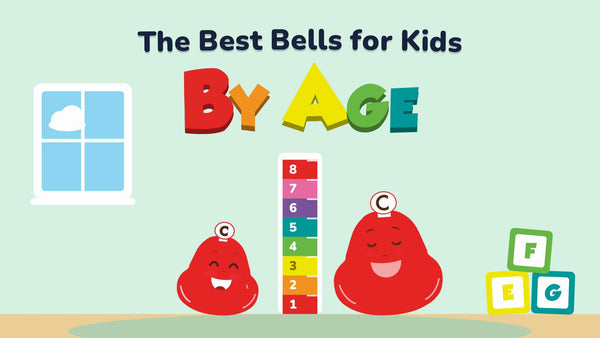
Safety: choose instruments made for babies and toddlers (check the age label), with no small parts that can come off. Here are the instruments we make for little ones, and our guide to the best bells for kids by age, which compares other brands too.

3. Music and movement

Put on some fun children's music and turn it up (a little). Whether they're dancing on their feet or bumping on their bottoms, babies know how to feel the music. One of our most popular dance songs is "The Tooty Ta." Here's a little guy named Harrison showing you how it's done:
One of my all-time favorite children's artists is Raffi, because his songs are fun, silly and energetic.
Try this: Hold your baby and sway to a slow song, then bounce to a fast one. They'll feel the difference between slow and fast in their whole body.
Safety: clear a soft space with nothing sharp at toddler height, since new walkers topple often.
4. Sing to your child
Singing to your child is the easiest music activity there is, and it's free. Pick songs with hand motions, like "Pat-a-Cake," "Itsy Bitsy Spider," "Open, Shut Them" and "The Wheels on the Bus." Your one-year-old may not sing the words yet, but they can absolutely learn the motions. Around their first birthday, many babies start playing games like pat-a-cake with you, which is one of the CDC's milestones for 12 months.
Try this: Sing the same three or four songs every day for a week. Then pause right before a motion and watch your child "finish" it. That little a-ha moment is musical memory at work.
Don't worry about how you sound. Your baby thinks you're the best singer in the world.
5. Pot and pan drumming
Need something to keep your little one busy while you make dinner? Pull out a couple of pots, a plastic bowl and a wooden spoon. Instant drum kit, and their very first percussion solo.
Try this: Tap a slow "boom, boom, boom" and see if they copy you. Then try fast. Then try quiet (on a plastic bowl) and loud (on a pot).
Safety: use cool, clean pots only, away from the stove, and skip anything glass or breakable.
6. Play high C and low C

Put a high C bell and a low C bell in front of your baby. Both are red, because they're both C, but one sounds high and one sounds low. Let your child play with both so they can hear the difference. (It's the same idea as our Level 1 chapter, Low C High C.)
Try this: When the low bell rings, crouch down low together. When the high bell rings, reach up high. Then sing "low" in a low voice and "high" in a high voice.
Safety: press-to-play bells are designed for little hands, but stay close and help with the pressing if needed. Grab a set from our deskbells collection.
7. Listen to "musical vegetables"
Nursery songs are great, but they're a bit like dessert. Rich, complex music (classical, jazz, music from around the world) is the musical vegetables. It's what we call "high information music," and it stretches your child's idea of what music can be.
Try this: Put on a classical piece during floor play, a jazz record in the car or a lullaby from another culture at bedtime. Here are our top 10 classical pieces for kids to start.
Safety: skip headphones for babies. Play music from a speaker across the room at a gentle volume.
8. Follow-along music time (together)

The American Academy of Pediatrics recommends avoiding screen media (other than video chatting) for babies under about 18 months, and watching together with toddlers from 18 to 24 months. So for most one-year-olds, I'd start with your ears, not a screen.
Try this: Totigies is our screen-free listening series: just press play during playtime and sing along. Closer to age two, Playtime Prodigies adds short, slow videos with movement games, rhythm songs and easy hand signs, and no instrument needed. Watch it together and do the motions with your child.
9. Sing along with books

Reading to your baby is important, and singing is too. Lots of board books are really songs ("The Wheels on the Bus," "Twinkle, Twinkle, Little Star"), so sing them instead of reading them. Point to the pictures as you go.
Try this: Our My First Songbook has beginner songs in color-coded notes with solfege and hand signs. At one, just sing the songs and point to the colors. Later, those same colors match the bells.
Safety: chewing is part of reading at this age. Sturdy board books are best for solo time, and spiral-bound books are for reading together.
10. Bells for daily routines

Give your day a soundtrack. Set a red C bell at the diaper station and ring it at every change. Ring the orange D bell at mealtime (you might want to ring this one yourself to avoid a baby-food-covered bell). Put the yellow E bell on the play mat for playtime.
With eight bells, you could set up eight "stations" around the house, or keep them all together on the play mat. The idea is to get those pitches into your child's ears through everyday play. That's meaningful play with pitch during the critical window for auditory development.
Safety: place bells where your child can reach them while sitting, not on high shelves they might pull down. Find a set in our deskbells collection.
11. A parent-and-baby music class
Look for a local music class for babies and grown-ups. Many public libraries offer free baby and toddler music times, and programs like Music Together and Gymboree run music and movement classes in a lot of towns.
Try this: Bring home one song from each class and sing it during the week. That's how a 45-minute class turns into a week of music.
12. DIY dance rings
Make dance rings with plastic shower curtain rings (or a sturdy bracelet-sized ring) and short ribbons. Check out these rainbow dancing rings at Buggy and Buddy. Silk scarves work great too.
Try this: Wave the ribbons high for high notes and low for low notes, or fast for fast music and slow for slow music.
Safety: keep ribbons short (about 6 inches), tie them on tight, and put the rings away after playtime. Never leave ribbons or scarves with a sleeping baby.
13. Jingle bell play (the safe way)
Babies love a jingle. The fun idea from Buggy and Buddy is jingle bell bracelets made from pipe cleaners. For one-year-olds, though, loose jingle bells are a choking hazard, so save the DIY version for kids 3 and up.
Try this: Choose a store-bought baby wrist rattle or jingle stick made for under-3s, or wear the jingle bells yourself and let your child dance and listen. Jingle on the beat, then freeze when the music stops.
Safety: check that the bells are sewn or sealed in and can't be pulled off, and supervise every time.
A simple daily music routine for 1-year-olds
Short and often beats long and rare. You don't need a "music time." You need a few musical moments sprinkled through the day you already have. Here's an easy one, about 10 minutes in total:
- Wake-up hello song (1 minute). The same song every morning: hello to your baby, to the dog, to the sun.
- Diaper bell (a few seconds, every change). Ring the red C bell and sing "Hello C."
- Bounce and dance (2 minutes). One fast song, one slow song. Bounce, sway, freeze.
- Play time jam (3 minutes). Shakers, pots or bells while you sing. High and low bells if they're in the mood.
- Bath time song (1 minute). Splash on the beat.
- Bedtime lullaby (2 minutes). The same lullaby every night. One-year-olds LOVE knowing what comes next.
If your little one wanders off after 30 seconds, that's okay. They're still listening.
What comes next
As your child turns two, they'll start singing the last word of songs, copying claps and pressing a bell over and over (and over) again. When you're ready, here are our 12 music activities for two-year-olds, and our guide to music lessons for toddlers (ages 1 to 3).
Prodigies Music gives your child 1,000+ guided video lessons, color-coded songbooks and printables, made for ages 2 to 12 and built around play. Level 1 starts with a single red bell in Hello C, and plenty of families start the listening and singing well before that.
🎵 Start your membership at play.prodigies.com/join
Frequently asked questions
Is it too early to start music with a 1-year-old?
Not at all. Musical play can start from birth. At one, music looks like singing, bouncing to a beat and exploring simple instruments with a grown-up, a few minutes at a time.
What instruments are safe for a 1-year-old?
Sturdy instruments labeled for under-3s with no small parts that can come off: egg shakers made for babies, a hand drum, press-to-play deskbells, or a pot and a wooden spoon. Skip homemade shakers that could open, loose jingle bells and long strings.
How long should music time be for a 1-year-old?
A minute or two at a time, several times a day. Follow your child: when they lose interest, stop and try again later. Ten minutes spread across the day is plenty.
What songs are good for 1-year-olds?
Short songs with lots of repetition and hand motions, like "Pat-a-Cake," "Itsy Bitsy Spider," "Open, Shut Them" and "The Wheels on the Bus," plus a steady hello song and bedtime lullaby. Add some classical or jazz listening for variety.
Can a 1-year-old watch music videos?
The American Academy of Pediatrics recommends avoiding screen media other than video chatting for children under about 18 months, and watching together from 18 to 24 months. Screen-free listening and singing together are the best fit for most one-year-olds.
Thanks for making music with your little one. As always, happy musicing!
Start your child’s musical journey
Join 10,000+ families learning music the colorful, hands-on Prodigies way.
Explore Prodigies