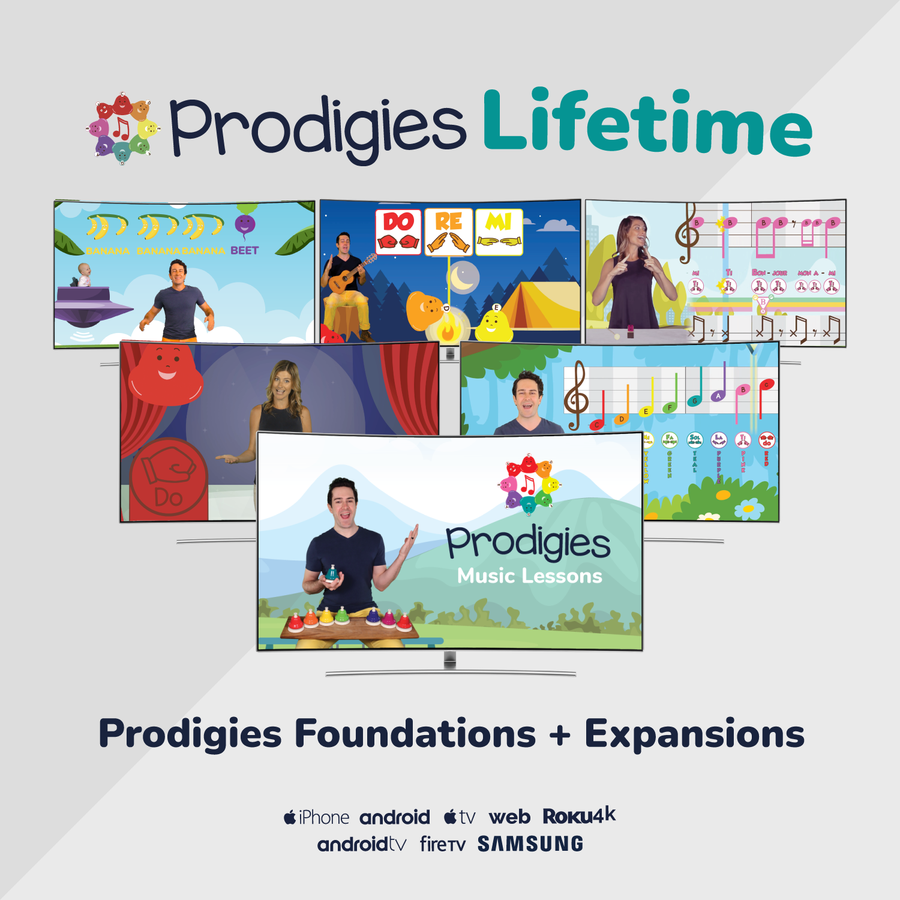
Music belongs to every child. Prodigies' color-coded, multisensory approach makes real music education accessible to diverse learners, including students with disabilities, in special education classrooms, therapy and intervention settings, and at home. There's no music-reading required, so every learner can find success from the very first note.
🎵 Start a membership → play.prodigies.com/join
Why Prodigies works for diverse learners
-
Color before notation. Kids play by matching colors, so pre-readers, emerging readers, and nonverbal students can all participate and succeed.
-
Multisensory by design. Students see the color, hear the pitch, sing, hand-sign, and play, engaging visual, auditory, and kinesthetic pathways at once.
-
Press-to-play instruments. Color-coded deskbells require no fine-motor technique, so success isn't gated by dexterity.
-
Predictable and low-pressure. Consistent, repeatable, self-paced lessons suit learners who thrive on routine.
-
Supports the whole child. The activities naturally reinforce turn-taking, motor skills, communication, and social-emotional learning, complementing many IEP goals.
Atticus's wish: the power of joy
When Make-A-Wish Hawaii called, a young Prodigies superfan named Atticus — a born performer with perfect pitch who is also autistic — had one wish: to meet Mr. Rob. Months after their first jam session in Waikiki, the two performed together on stage at Make-A-Wish's national gala at Walt Disney World, in front of more than 1,000 people. They played "It's a Small World," and the room lit up.
It's the clearest proof of what we believe: every child deserves a real, joyful connection to music. Read Atticus's story →
Loved by families, special educators & therapists
"One of my students has Autism Spectrum Disorder. He'd mastered everything in our old curriculum, but he just couldn't learn to read notes on the staff. So I tried Prodigies, using the color system. He went from not being able to read at all, to breezing right through the music — so long as it's colored."
— Hanna Z., certified music teacher
"My 11-year-old son has severe anxiety, autism, and additional developmental disabilities — but music has been how he connects. He felt confident enough to get up at his school talent show and play Ode to Joy on his deskbells. It was one of the most amazing things he's done."
— Alison C.
"João is 9 and he is autistic and minimally verbal. But he loves the Prodigies videos. He claps and taps and sings, and he's drawn the Prodigies characters and hand signs all over his bedroom walls himself. To see an autistic child gaining so much joy nearly made me cry. It makes not only a musical impact, it makes a life impact."
— Ann A., music teacher, Brazil
"This is so cool and interactive for my kiddos with special needs, especially my two nonverbal kids! This is a game changer."
— Michele M.
Prodigies is used in special education classrooms, autism and sensory programs, music therapy and intervention settings, and homes around the world. It's designed to include every learner in making music, not to replace individualized therapy or instruction. Read more in using Prodigies with kids & adults with special needs and teaching music lessons to children with special needs.
Where to start
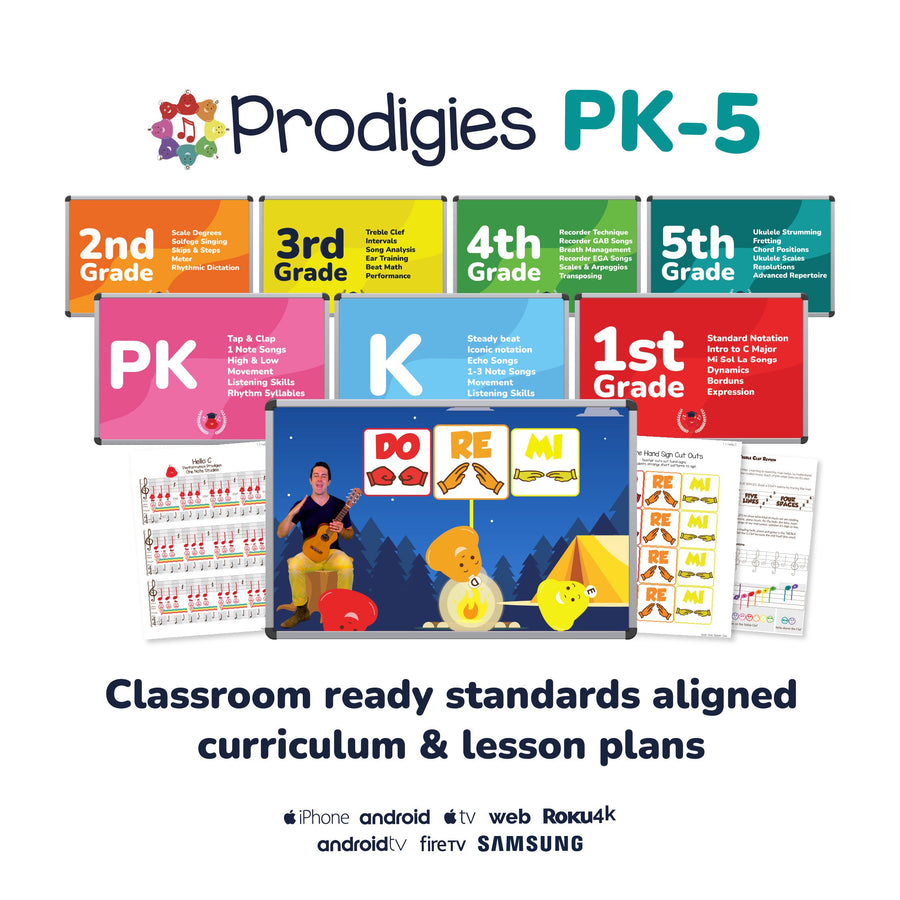
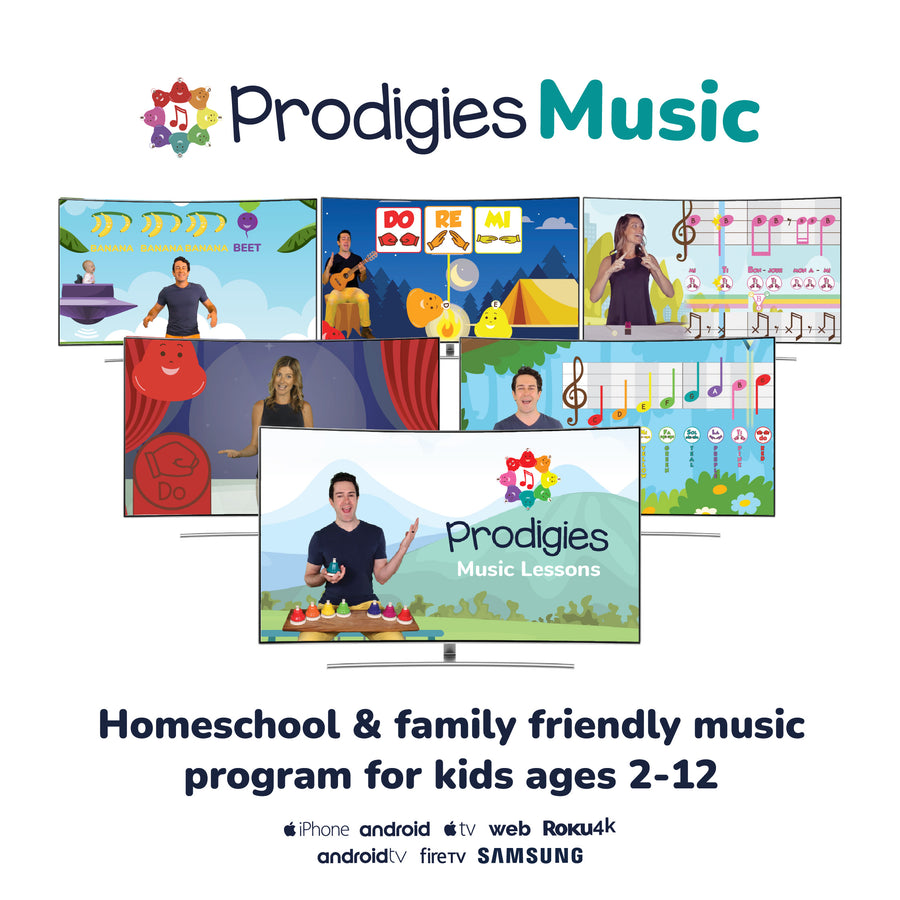
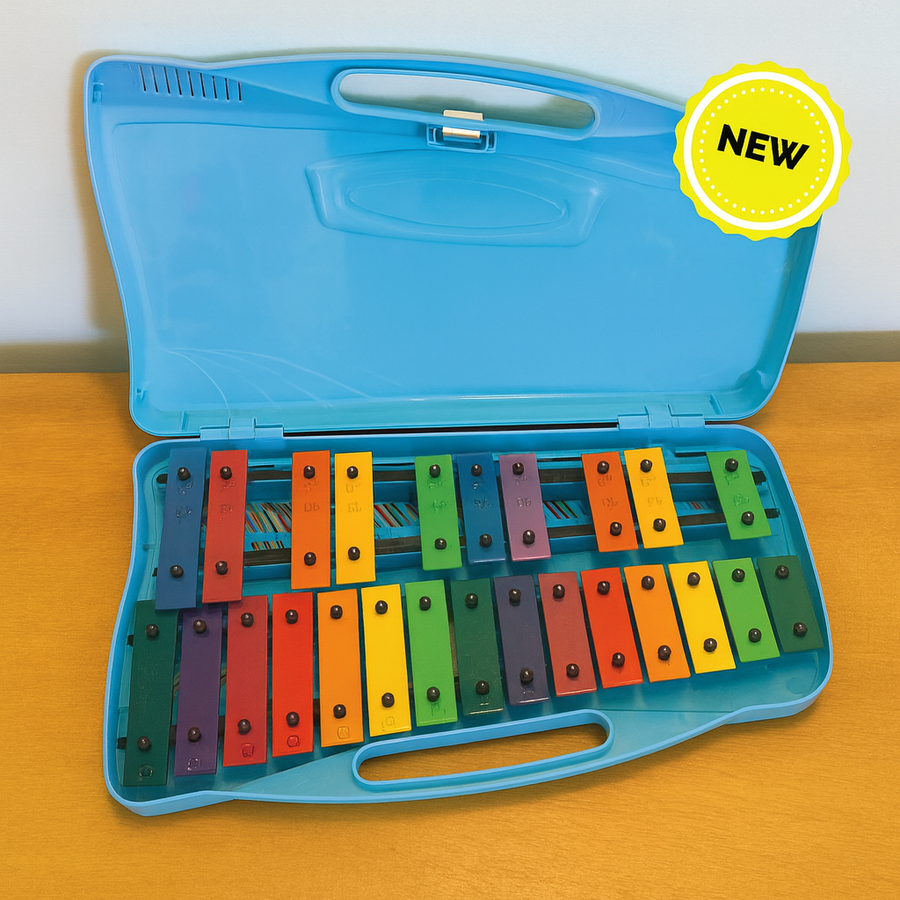
For a classroom or district, the PK–5 site license gives you a full, standards-aligned curriculum any educator can deliver. For home, therapy, or a single classroom, pair a membership with durable color-coded deskbells or boomwhackers. Funding it through a school? Many programs qualify, including California Prop 28 (see our funding guide).
Frequently asked questions
Is Prodigies a good fit for students with autism, ADHD, or sensory needs?
Many educators and families use it in these settings because it's color-coded, predictable, multisensory, and low-pressure. As with any resource, you know your learners best and can adapt the pace and activities to fit each child.
Do students need to read music?
No. The color-coded system lets students play real music by following colors, with no notation required.
Can it support IEP goals?
The activities complement common goals like motor development, turn-taking, communication, and social-emotional learning. It's an inclusive music curriculum, not a substitute for individualized therapy.
Is it for classrooms or home?
Both. Schools use the PK–5 site license; families and therapists use a membership plus instruments.
Questions about a classroom, district, or therapy setting? Email hello@prodigies.com and we'll help you find the right fit.



![Starter Kit [BACKORDER - EARLY 2027]](http://prodigies.com/cdn/shop/files/Starter-Kit-2026_8c07695a-d85f-4ac9-a9de-298d5cac7b60.png?v=1782819210&width=900)