


Music Lessons for Preschoolers (Ages 3-6): Where to Start
Quick answer: Music lessons for preschoolers (ages 3 to 6) work best when they're short, playful and hands-on. Here's where to start:
- Keep lessons to 10 to 15 minutes, a few days a week.
- Sing every day: hello songs, echo songs and silly made-up songs.
- Play real notes on a color-coded instrument, like deskbells.
- Add solfege hand signs (Do, Re, Mi) so kids can see the notes they sing.
- Keep a steady beat with clapping, drums and marching.
- Listen to rich music together: classical, jazz and music from around the world.
Below: what lessons look like at age 3, age 4 and ages 5 to 6, the best first instruments, a simple routine and answers to common questions.
Ages 3 to 6 are some of my favorite years to teach music. Kids this age can follow colors, copy a rhythm, remember a short song and play it again tomorrow. They're also right in the middle of the critical window for auditory development, so the music they hear and play now really counts.
The good news? Music lessons for preschoolers don't have to look like piano lessons. Nobody has to sit still for 30 minutes, and nobody has to read notes on a staff yet. At this age, a great music lesson looks a lot like playing... because it is.
Here's how I'd approach it, whether you're a parent at the kitchen table or a teacher with a rug full of preschoolers.
What music lessons look like from ages 3 to 6
Age 3: sing, play, repeat
Three-year-olds learn by doing the same fun thing again and again. Plan on five to ten minutes of focused music time, with lots of moving in between. Sing hello songs and echo songs, play "high and low" with two bells, and try a one-note song like "Hello C" on a single red bell. One note is plenty. Repetition is the lesson.
For a full plan with pitch games for this age, here's how to start music lessons with a 3-year-old.
Age 4: real songs on real notes
Four is when a lot of kids are ready to play a whole song. With three colored bells (red C, orange D and yellow E), a 4-year-old can play "Hot Cross Buns" and most of "Mary Had a Little Lamb." Color-coded sheet music lets them read the song by color, long before they can read letters. This is also a great age to add solfege hand signs, so the notes they play and the notes they sing start to match.
Ages 5 and 6: reading music and kindergarten
Five- and six-year-olds can follow a longer song, play with both hands and start connecting colors to notes on a real staff. Many piano teachers like to start formal lessons around this age, especially for kids who already have a few years of musical play behind them. If you're ready for that next step, here's how to teach a 5-year-old to read music, step by step.
Six things to focus on at this age
1. Meaningful play with individual notes
Kids learn the alphabet one letter at a time. A is for apple, B is for ball, and eventually they're reading Shakespeare. Notes work the same way. When a child plays one bell, hears its sound and knows its name ("that's red C!"), they're learning the musical alphabet. Bells, Boomwhackers and any instrument that lets you focus on one note at a time are perfect for this, and it's the heart of how we teach at Prodigies.
2. A sense for pitch
Preschoolers are in the middle of the critical window for auditory development, which means their ears are ready for a TON of musical information. In a long-term study in Japan, music researcher Ayako Sakakibara trained 24 children between ages 2 and 6 to name chords by ear, and 22 of them developed absolute (perfect) pitch. In other words, give your kids meaningful play with pitch during early childhood. Not every child will develop perfect pitch, and that's okay. Every child can develop a strong musical ear. (Here's one family's story: how a 2-year-old developed perfect pitch.)
3. Solfege hand signs
Solfege is the Do Re Mi Fa Sol La Ti Do you might remember from "The Sound of Music." The Curwen hand signs give each of those syllables its own shape, so kids can see and feel a note as they sing it. Do is a fist, Mi is a flat hand, Sol is a hand facing you, and so on. It builds the ear and the voice at the same time, and you can do it anywhere, no instrument needed.
Hand signs have been part of Prodigies since our very first Preschool Prodigies videos. To try them at home, start with this free solfege singing video, then grab the free Solfege Scoops printables.
4. A steady beat
Before rhythm comes beat: the steady pulse you can clap, march or bounce to. Clap along to songs, march around the kitchen, or tap a drum while you sing. Older preschoolers can start saying rhythms out loud, like "beet, beet, cherry, beet" (that's how we teach rhythm with our Sweet Beets fruits). For more ideas, see these steady beat activities.
5. Singing, making up songs and improvising
You can do a huge amount of music teaching with nothing but your voice. Sing nursery rhymes and folk songs, and make up new ones. When our daughter was two and a half, she sang about EVERYTHING she was doing: painting, cooking in her play kitchen, getting dressed. We try to model that at home by turning our favorite songs into silly ones about brushing teeth, putting on shoes and going for walks.
Attention spans are short at this age. The good news is that you can sing about pretty much anything, so music can happen all day long, a minute at a time.
6. Listening to "musical vegetables"
Kids need a balanced musical diet. Nursery songs are great, but they're a bit like dessert. Rich, complex music (classical, jazz, music from around the world) is the musical vegetables: it shows kids how much music can do. Put it on during drawing time, in the car or at bedtime. For a place to start, here are our top 10 classical pieces for kids.
And don't forget free play. Simply having instruments around the house or classroom, where kids can bang, ring and explore on their own, is the first step to a lifelong love of music. Need ideas to get started? Here are 15 music activities for preschoolers you can do at home or at Circle Time.
The best instruments for preschoolers
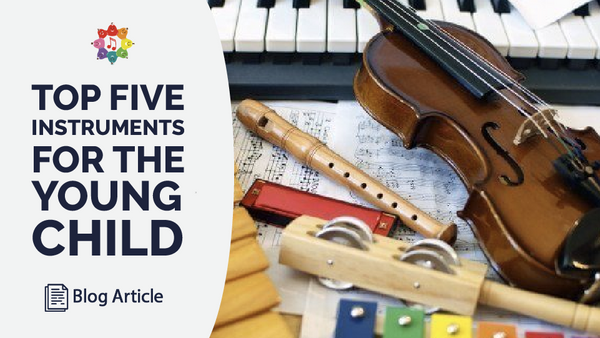
The best first instrument for a 3 to 6 year old is easy to play, hard to break and plays real, in-tune notes.
- Color-coded deskbells. My favorite for this age. One press, one clear note, and an 8-note C major set is enough for hundreds of songs. In our color system, C is red, D is orange, E is yellow, F is green, G is teal, A is purple and B is pink. See our deskbells, or compare them with other brands in our guide to the best bells for kids by age.
- Boomwhackers. Light, colorful and great for groups and siblings. Our Boomwhackers for kids guide has free songs and activities.
- Glockenspiel or xylophone. The bars run low to high, just like a piano, which makes it a nice bridge to keyboard later. See our glockenspiels and xylophones for kids.
- Shakers and drums. Perfect for steady beat. You can even make your own with these DIY musical instruments.
What about piano? Preschoolers can absolutely start on piano or keyboard, as long as lessons look like play. Color stickers on the keys that match your bells and sheet music make the jump easy. For help deciding, see what age to start piano lessons and piano vs. keyboard lessons.

A simple music routine for ages 3 to 6
Short and often beats long and rare. Here's a 10 to 15 minute routine you can do a few times a week:
- Hello song (1 minute). Sing hello to everyone by name.
- Move (3 minutes). Freeze dance, or march to a steady beat.
- Sing and hand-sign (2 minutes). Do, Re, Mi, up and back down.
- Play (5 minutes). A short song on the bells, following color-coded sheet music.
- Listen (2 minutes). One piece of music, lying on the floor with eyes closed.
- Goodbye song (1 minute). Same one every time. Kids love knowing what comes next.
If they don't get it on the tenth try, that's okay. Try again tomorrow.
Where to start with Prodigies
If you'd like a plan for all of this, that's exactly what Prodigies Music is. Level 1 starts with a single red bell in Hello C and builds one note at a time: Low C High C, C and G Best Friends, Do Re Mi, Mi Sol La, Fa Sol La, Major Chords and Songs. Each lesson is a short video, so your kids sing, hand-sign and play along with me, Mr. Rob.

Want to try it first? The free Prodigies Music Starter Program is a full first week of lessons, with videos, sheet music and activities. You can also see how it all fits together in our preschool music curriculum.
Prodigies gives your child 1,000+ guided video lessons, color-coded songbooks and printables, made for ages 2 to 12 and built around play.
🎵 Start your membership at play.prodigies.com/join
Frequently asked questions
What age should a child start music lessons?
Musical play can start as early as age two. Around ages 3 and 4, kids are ready for short, structured lessons with singing, movement and a color-coded instrument. Many families start formal instrument lessons, like piano, around ages 5 to 6.
Can a 3-year-old take music lessons?
Yes. At 3, music lessons should be short (5 to 10 minutes) and playful: singing, moving to a beat and playing one or two notes on a simple instrument like bells. Repetition is the key.
How long should a music lesson be for a preschooler?
About 10 to 15 minutes at home, a few times a week. Preschool music classes can run longer if you switch activities every few minutes and mix sitting with moving.
What is the best first instrument for a preschooler?
Color-coded deskbells are a great first instrument for ages 3 to 6. They're easy to play, they play real in-tune notes, and kids can read color-coded songs right away. Boomwhackers, a glockenspiel and simple drums and shakers are great too.
Can preschoolers learn to read music?
Yes, with color. Preschoolers can read color-coded sheet music long before they can read letters. Around ages 5 to 6, many kids are ready to connect those colors to notes on a real staff.
What are solfege hand signs?
Solfege hand signs (also called Curwen hand signs) give each note of the scale, Do Re Mi Fa Sol La Ti Do, its own hand shape. They help young kids hear, sing and remember pitch, and they work anywhere, no instrument needed.
Thanks for making music with your little ones. As always, happy musicing!
Start your child’s musical journey
Join 10,000+ families learning music the colorful, hands-on Prodigies way.
Explore Prodigies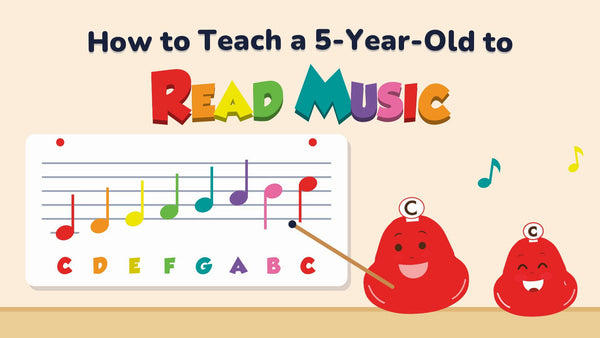
1 comment
1